Expertise
How do we calculate the impact savings from using Ecodicta?
Ecodicta was created to extend the life cycle of clothes, connecting people who want to share and take care of their clothes.




Ecodicta was born to extend the life cycle of garments, connecting people who want to share and take care of their clothes. They do this through a monthly subscription system, in which users receive a secret catalog of four garments chosen by stylists. At the end of the month, the Ecodicta user will return the garments and receive new ones to extend their life span and increase their use exponentially.
This is what the Ecodicta’ team asked us. Aiming to demonstrate that their value proposition is not only beneficial for their customers’ style and wallets, but also for the environment.
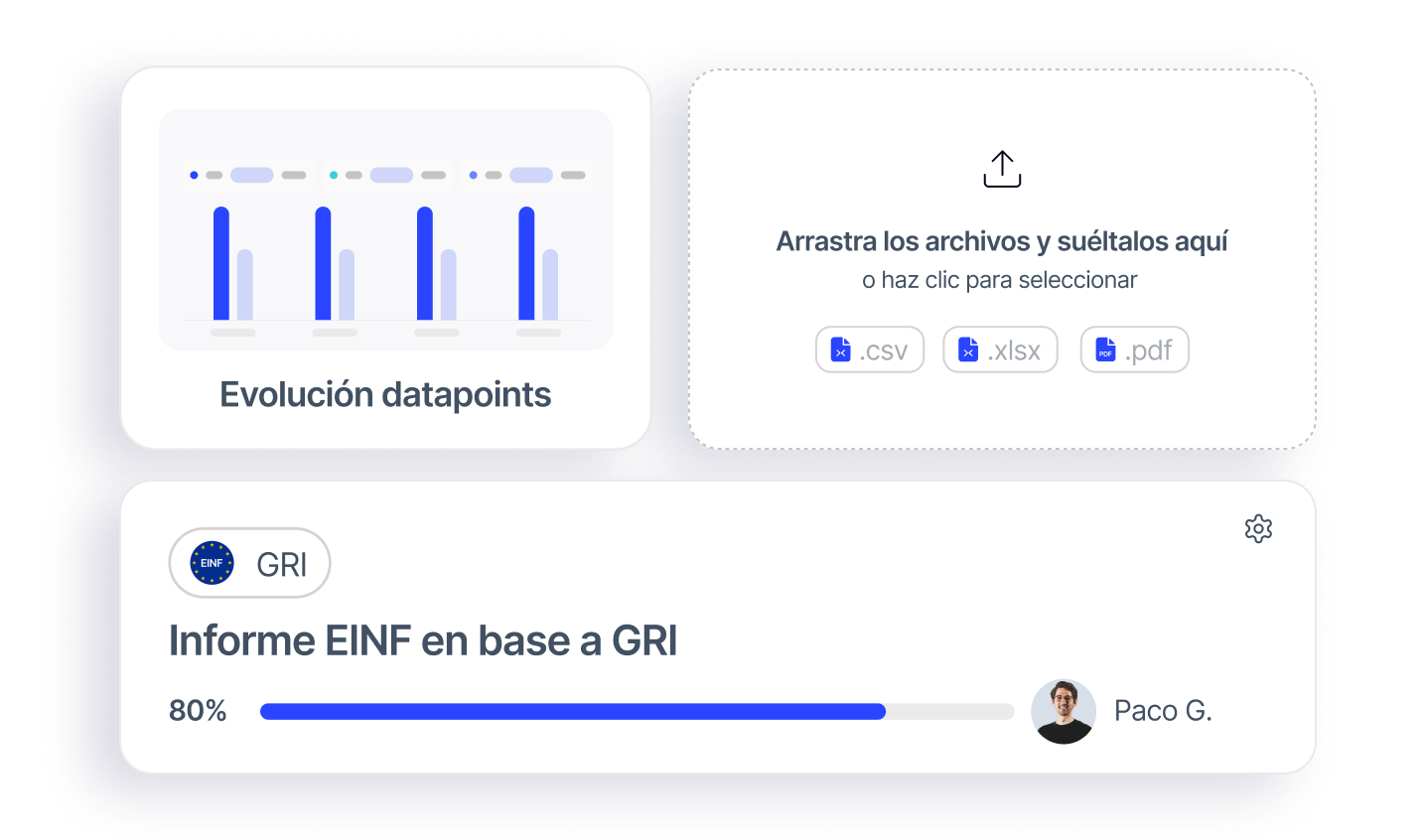
In Dcycle we then begin to enter the data into our tool:
On average, Ecodicta’s target customer spends €638 per year on fashion, which accounts for the purchase of 13 garments. This translates into a total footprint of 200.07 kg of CO2 equivalent per person. Taking into account the number of garments that Ecodicta has and their uses, the savings of a garment rented at Ecodicta equals 12.43 kg of CO2 equivalent. This means that if the garments rented at Ecodicta had been purchased, they would have generated a unitary footprint of 15.39 kg of CO2 eq. whereas thanks to their innovative business model, they manage to reduce each garment’s footprint to 2.96 kg of CO2 equivalent.
A monthly rental of one Ecodicta box for one year has a footprint of 142.08 kg CO2 eq. If instead of renting those garments, the consumer had bought the 13 estimated garments during that year, the total impact would be 200.07 kg. In other words, Ecodicta’s business model allows to save 29% of this carbon footprint and to enjoy 35 more garments.
As a result, during 2020 Ecodicta has managed to save 6,814.5 kg of CO2 equivalent, the same as traveling by plane 15 times from Madrid to Beijing. Thus it proves that, indeed, its value proposition is highly beneficial for the environment.

Carbon footprint calculation analyzes all emissions generated throughout a product’s life cycle, including raw material extraction, production, transportation, usage, and disposal.
The most recognized methodologies are:
Digital tools like Dcycle simplify the process, providing accurate and actionable insights.
Some strategies require initial investment, but long-term benefits outweigh costs.
Investing in carbon reduction is not just an environmental action, it’s a smart business strategy.



.png)