Reporting
PwC ESG Services Pricing Breakdown | Dcycle
We break down PwC’s ESG service costs, the key factors driving them, and how to reduce expenses while ensuring compliance.


How Much Does PwC Cost in Terms of ESG Consulting?
What You Need to Know Before Hiring ESG Services With PwC
Why PwC’s Price Varies So Much Between Companies
3 Trends That Are Making ESG Services More Expensive (or Cheaper)
Common Mistakes When Hiring PwC Without a Clear Strategy
Why Dcycle Is the ESG Solution That Adapts to Any Use Case
Frequently Asked Questions (FAQs)
PwC ESG Services Pricing Breakdown, three words that raise an essential question for any company serious about sustainability: How much does it really cost to hire PwC for ESG consulting? And even more crucially, what are you truly paying for?
The truth is, there’s no fixed price tag. Every proposal is customized based on the project’s complexity, scope of work, and the specific regulations that must be met. Understanding how these costs are structured helps you not only optimize your budget but also maximize the return on every euro invested.
In a landscape where frameworks like CSRD, SBTi, and the EU Taxonomy keep evolving, being able to anticipate regulatory requirements and plan with reliable data can make the difference between leading the transition and falling behind.
In the following sections, you’ll discover how PwC structures its ESG consulting prices, which factors drive the final cost, and, most importantly, how to optimize your investment so that sustainability becomes a real strategic advantage.
Talking about how much PwC costs in ESG consulting is not simple, because there is no fixed rate.
Each project is unique and the final price is adjusted according to the business sizes, the scope of work, and the complexity of the regulations that must be covered.
The cost can increase when it is necessary to manage large volumes of data, coordinate teams in several countries, or comply with multiple regulatory frameworks simultaneously.
An SME seeking to comply with a single standard will pay much less than a global company that must report under CSRD, SBTI, and the European taxonomy, or even frameworks like the non-financial reporting directive at the same time.
Although PwC does not publish official prices, the market indicates that ESG projects can range from tens of thousands of euros for specific cases to six figures when the scope is international, assurance levels are high, and data requirements are maximum, especially when incorporating complex elements like custom reporting for multi-framework compliance.
In some countries, ESG service rates are limited if the provider also performs the financial audit.
This forces price adjustments or splitting the work among different actors, which impacts the final budget.
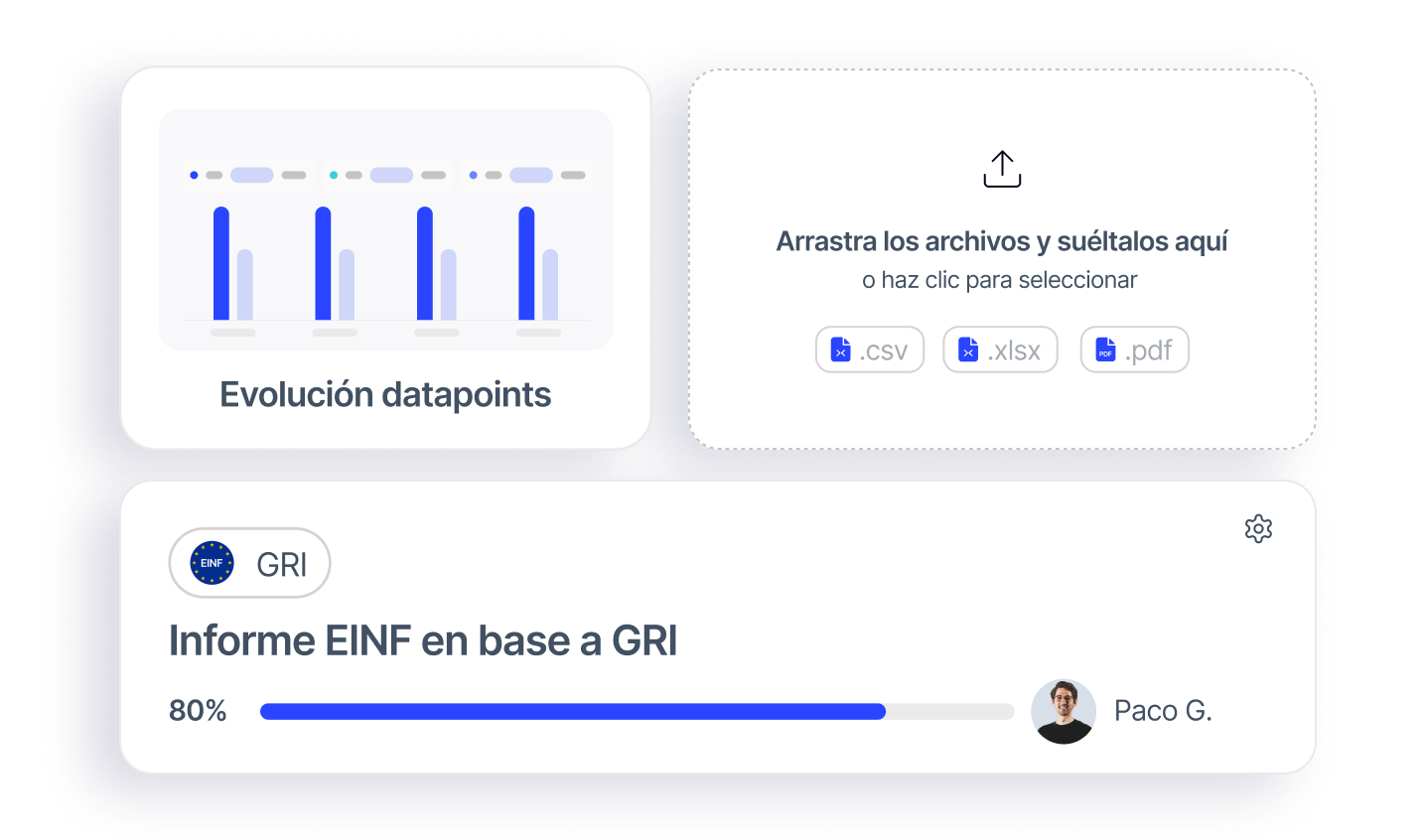
At Dcycle, we are not auditors or consultants, but a Solution for companies that centralizes all ESG data and adapts it for any use: EINF, SBTI, CSRD, ISOs, or any other framework.
This way we reduce times, avoid duplicated costs, and keep data always ready for what the market demands.
If we want sustainability to be a real strategic lever, it is not enough to know how much a provider charges.
We must be clear about what data we need, how we are going to obtain it, and how we will reuse it to respond to any requirement without losing time or money.
Hiring ESG services with PwC means understanding well what they offer, how they work, and which variables affect the final budget.
It is not enough to request a proposal, it is key to have clear objectives, scope, and information we will provide from the start.
PwC covers everything from initial diagnostics to identify the company’s ESG status, to strategy design and reporting adapted to frameworks such as CSRD, SBTi, the European taxonomy, or ISO standards.
They also offer assurance services to validate the quality and coherence of the published information.
Each of these services involves a different level of technical depth, data use, and team dedication, which directly impacts cost.
It is not the same to pay for a one-off diagnostic as for a complete reporting project or the development of a comprehensive strategy.
The broader the service, the more specialized work hours and greater detail level are required.
If the company already has consolidated ESG data and clear internal processes, the work will be faster and more cost-efficient.
If starting from scratch, more time will be needed for data collection, validation, and structuring.
Sectors with international supply chains, multiple sites, or specific regulations often require more exhaustive analysis.
This implies more coordination, more technical resources, and therefore, higher cost.
When highly tailored support is needed, with frequent meetings, custom reports, and continuous assistance, the final price increases.
A more standard service, with predefined deliverables, will be more economical.
At Dcycle, we are not auditors or consultants, but a Solution for companies that collects all ESG information and automatically transforms it for any use: from an EINF to a report under ISO.
This way we reduce times, avoid duplicated costs, and ensure that you always have your data ready to meet market demands.
If we want sustainability to work as a real strategic lever, we need to be clear on what we will measure, how we will measure it, and how we will reuse this information for all use cases without multiplying efforts or invoices.
PwC’s ESG service price changes significantly because each company starts from a different situation.
It is not the same to work with a company that already has established reporting processes as with one that has never gathered its ESG data.
1. Each Company Has a Different Structure and Level of Regulatory Exposure
Companies with international operations, presence in regulated sectors, or multiple subsidiaries often require more analysis and coordination.
This means more work hours and a larger technical team.
2. The Amount and Quality of ESG Data Directly Affect the Budget
If the data is already structured and validated, the work is faster and cheaper.
When the information must be collected, cleaned, and verified from scratch, the cost increases considerably.
3. Technical Integrations or Customizations Increase the Base Cost
When the project requires adapting systems, creating integrations with internal platforms, or generating very specific reports, additional development and configuration hours are added.
4. External verification or certification services are also billed separately.
If, in addition to the main work, independent assurance or specific certifications are requested, these services are charged separately and raise the total cost.
The ability to align reports and data with demanding regulations is a key value factor.
A good partner must guarantee solid methods and the ability to prove the origin and treatment of each data point.
In environments involving multiple teams and countries, it is essential to coordinate without losing quality or deadlines.
The brand’s weight and its capacity to generate trust can influence market perception and access to capital.
At Dcycle, we are not auditors or consultants, but a Solution for companies that centralizes all ESG information and automatically adapts it to any use case: EINF, SBTi, CSRD, European taxonomy, ISOs, and any other required by the market.
This way we reduce times, control costs, and ensure that sustainability is a real strategic lever to compete and grow.
Every year we see more regulatory demands and a higher number of external audits.
Complying with frameworks like CSRD or the European taxonomy requires more work in data collection, traceability, and validation.
This raises costs, especially if the company does not have well-defined processes from the start.
Companies are seeking digital solutions to manage large volumes of ESG data and automate reporting.
This can increase service costs if it involves custom developments or complex integrations, but it can also reduce costs if a tool is adopted that centralizes and reuses information for different regulatory frameworks.
Many organizations fully delegate ESG reporting because they lack internal teams with the capacity or time to do it.
This full outsourcing is usually more expensive, although it can save resources if the provider delivers everything ready to comply without redoing work.
Before signing a contract, we must be clear about what we want to achieve and what data we already have available.
The more structured the information, the lower the final bill and the faster results can be delivered.
It is also crucial to analyze whether the provider covers all the regulatory frameworks we need or if additional services will be required.
A fragmented service not only costs more but also causes delays and loss of information consistency.
At Dcycle, we are not auditors or consultants, but a Solution for companies that collects, organizes, and distributes all your ESG data for any use: EINF, SBTi, CSRD, European taxonomy, ISOs, or any other framework.
With a single data flow, we reduce costs, save time, and guarantee that sustainability is a strategic lever for competing and growing.
Before engaging with a major consultancy like PwC for ESG (Environmental, Social, and Governance) services, it’s essential to understand that the success of the project does not depend solely on the consultant’s expertise. The level of preparation within your company is what ultimately determines whether the investment delivers measurable value or becomes an expensive, one-off report.
This section will guide you through the key steps to prepare your company, strengthen your internal ESG foundations, and optimize both time and budget when hiring PwC or any other consulting partner.
The first and most important step before hiring PwC is to understand your current ESG position. Without a defined baseline, even the best consulting team will spend excessive time trying to collect and clean data — a process that inflates costs and extends timelines.
To define your baseline, consider:
Companies that arrive at a consulting project with a structured and verified dataset can reduce project costs by up to 30%, according to market benchmarks.
Another common mistake is treating ESG reporting as a compliance exercise. To get real value from PwC’s services, you must have a strategic reason behind your ESG project.
Ask yourself:
The clearer the objectives, the easier it will be for PwC to design a tailored roadmap instead of a generic plan. Remember: ESG consulting is most powerful when it aligns with your corporate strategy and your financial performance metrics.
Setting a purpose also allows you to prioritize investments. For example, if your main risk lies in energy consumption, it’s smarter to focus PwC’s resources on that dimension rather than dispersing efforts across every ESG criterion.
One of the hidden costs in ESG projects is poor data governance. If your teams don’t know how ESG data is generated, validated, and updated, the consultant will have to create this structure from scratch.
To prevent that, establish an internal ESG governance model before the project starts:
Having this governance ready allows PwC to focus on analysis and strategy — not on operational cleanup. It also ensures continuity once the consultancy ends, so your ESG management remains robust and autonomous.
PwC’s pricing often depends on how much internal support your company can provide. The more prepared your team is to collaborate actively, the less time the consulting firm needs to spend on project management and data requests.
Before launching the process:
By quantifying your available resources, you can negotiate a clear scope with PwC and avoid hidden costs due to unforeseen coordination work.
In short: organization saves money.
Many companies overlook a crucial detail: ESG regulations often overlap. A report prepared for the CSRD may contain information also required for the European Taxonomy, SBTi, or ISO 14001 standards.
If you don’t plan for this overlap, you’ll end up paying multiple times for similar data collection or verification processes.
Before hiring PwC, map out:
With this map, you can request that PwC deliver cross-usable datasets instead of isolated reports. This small change dramatically improves the return on investment and future-proofs your ESG management.
PwC’s greatest value often comes from connecting sustainability data with financial performance and risk management. But for that to happen, you need to bring Finance into the conversation from the start.
Make sure that:
When ESG becomes part of financial planning, the consulting outcome stops being a report — it becomes a strategic management tool.
Many companies rely on PwC to structure their ESG systems but later find themselves unable to maintain them without external help. To avoid this dependency, consider integrating ESG management software that automates data collection and reporting.
Solutions like Dcycle can centralize all ESG data and transform it into outputs compatible with any regulatory framework. This allows you to reuse the same data across multiple PwC projects or even continue managing ESG internally once the initial consultancy is complete.
In other words, combining PwC’s methodological rigor with Dcycle’s technological automation creates a hybrid model that maximizes efficiency and minimizes recurring costs.
PwC can help you create an ESG strategy, but only you can ensure that it’s sustainable over time. Before starting, it’s valuable to define a 3- to 5-year ESG roadmap that outlines milestones, KPIs, and review cycles.
This roadmap should:
A structured roadmap ensures that the consulting engagement is part of a broader journey, not just a one-time deliverable.
ESG transformation is not only technical; it’s cultural. Before PwC arrives, it’s essential to prepare your organization through internal communication.
Explain to all teams:
When employees understand the “why,” data flows better, collaboration improves, and consulting hours are used more efficiently. PwC’s work will be smoother — and your project, more impactful.
Finally, don’t measure PwC’s value solely by the deliverables (reports, diagnostics, or certifications). The real success lies in your company’s ability to act upon those insights.
Track:
By doing so, you transform consulting from a cost center into a continuous improvement mechanism.
One of the most common mistakes is thinking that, by hiring PwC, all the work will fall on them.
In reality, much of the success depends on our ability to collect, validate, and deliver data in an organized way.
If we do not have this foundation, the project will take longer and the cost will increase.
Traditional consulting does not work like a technological solution.
In most cases, the approach will be manual and based on human teams, which means more time and recurring costs.
If we are looking for automation and reusability of ESG data for multiple regulatory frameworks, we must opt for a different working model, one that allows centralized management and continuous evaluation of the company’s ESG score.
One option is to leverage sustainable finance frameworks that integrate reporting and investment criteria efficiently.
If we do not define what deliverables we expect and the exact scope of the service, we risk receiving incomplete work or having to pay for unplanned extensions.
Clarity on scope is fundamental to avoid extra costs and delays.
PwC’s price in ESG projects does not only depend on the hours worked or the size of the assigned team.
Factors such as the company’s prior preparation, the complexity of the applicable regulations, and the number of requested revisions can significantly increase the budget.
In addition, many associated costs are not included in the initial proposal.
Services such as external verification, technical integrations, or adaptations to new regulatory requirements are often billed separately.
If we do not take this into account from the beginning, the final figure can far exceed the estimate.
At Dcycle, we are not auditors or consultants, but a Solution for companies that centralizes all your ESG data and automatically adapts it to any use case: EINF, CSRD, SBTi, European taxonomy, ISOs, or any other standard, using state-of-the-art ESG software to ensure precision and scalability.
With a single workflow, we reduce times, control costs, and turn sustainability into a real strategic lever to compete in the market.
In a market where more and more companies measure their ESG impact to remain competitive, we cannot depend on slow, costly, and fragmented processes.
We need a solution that centralizes all the information and allows us to reuse it without having to redo the work for each regulation or requirement.
At Dcycle, we are not auditors or consultants, we are a Solution for companies that collects, organizes, and distributes all ESG data automatically.
This means that, with a single information base, we can generate reports for EINF, SBTi, CSRD, European taxonomy, ISOs, or any other framework the business needs to comply with.
This also includes calculating your Carbon Footprint as part of the overall sustainability strategy, supported by research and methodologies such as carbon footprint paper.
This approach eliminates duplicate efforts and directly reduces the time and cost associated with ESG management.
By working with reliable and always up-to-date data, we can respond quickly to any regulatory request, tender, or audit without stopping daily operations.
Additionally, having all ESG information in a single environment allows us to detect inefficiencies and make strategic decisions based on real data.
This way, we turn sustainability into a growth lever and a differentiator compared to competitors still dependent on manual or dispersed processes.
With Dcycle, we move from seeing ESG data collection and reporting as an obligation, to managing it as a strategic tool that drives the business and prepares us for any market demand.
There is no standard price.
The cost can range from tens of thousands of euros for small projects to six-digit figures when the scope is international and the data requirements are high.
It depends on the company size, the complexity of the regulations, and the volume of information to be managed.
Its main focus is consulting and assurance of ESG information, although in some cases they integrate technological tools.
These solutions are usually tied to their own processes and do not always allow the data to be reused for other regulatory frameworks without additional work.
The most decisive are:
Yes, they have experience in compliance with regulatory frameworks such as CSRD, EINF, European taxonomy, and international standards such as ISOs or SBTi.
However, the delivery is usually focused on a specific project or regulation, which may require additional work for other uses.
In many cases, yes.
At Dcycle, we are not auditors or consultants, but a Solution for companies that centralizes all ESG information and automatically adapts it to any use case.
With a single data flow, we reduce costs, avoid duplicated efforts, and keep the information ready to respond to any market demand without additional processes.
In addition, companies that aim to strengthen their governance model and prepare for future audits can benefit from specialized methodologies designed to audit corporate sustainability, ensuring that every process and report meets international ESG standards.
Carbon footprint calculation analyzes all emissions generated throughout a product’s life cycle, including raw material extraction, production, transportation, usage, and disposal.
The most recognized methodologies are:
Digital tools like Dcycle simplify the process, providing accurate and actionable insights.
Some strategies require initial investment, but long-term benefits outweigh costs.
Investing in carbon reduction is not just an environmental action, it’s a smart business strategy.



.png)
.jpg)