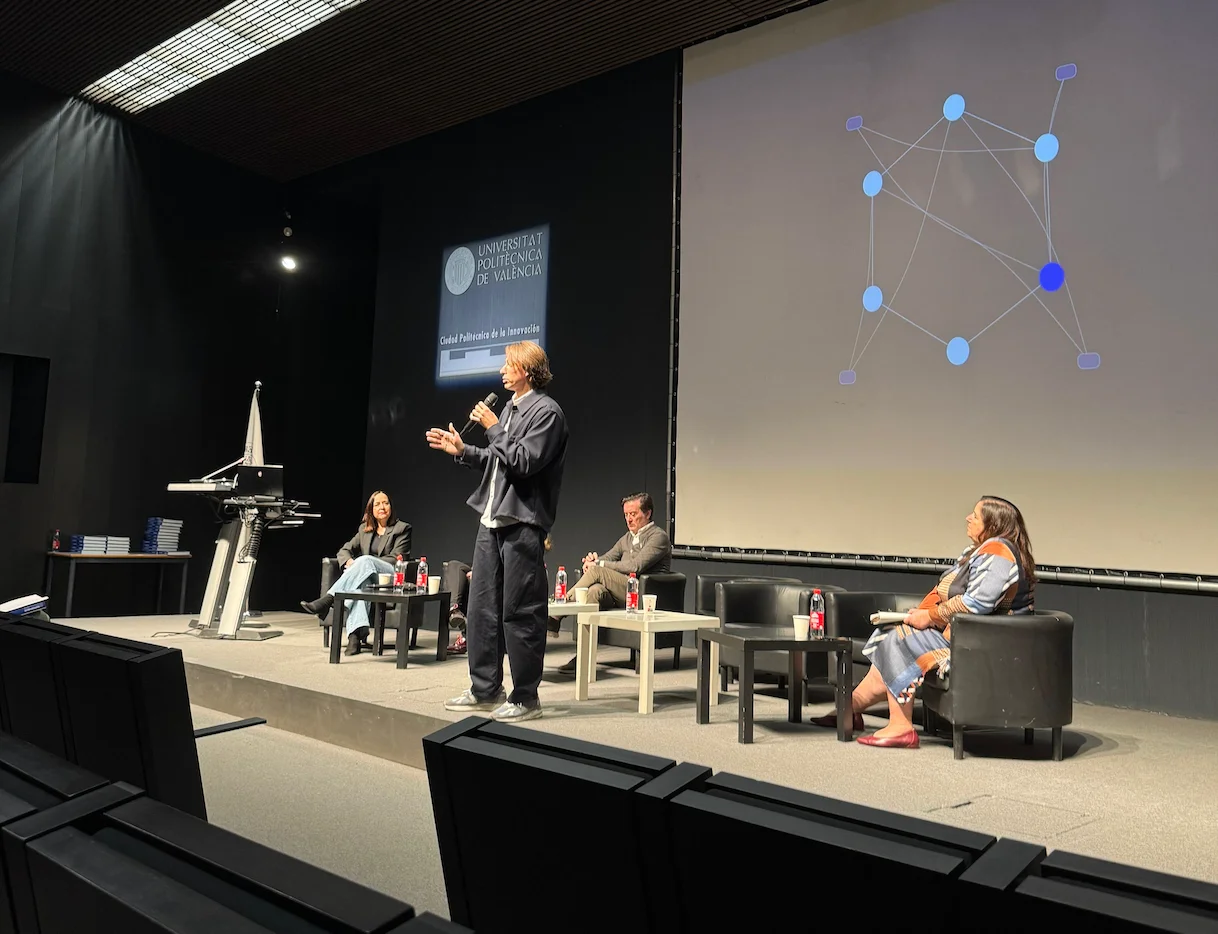
March 25, 2026 Valencia, Spain 400 attendees
Corresponsables Valencia 2026: turning ESG compliance into competitive advantage
 Universitat Politècnica de València, Jornadas Corresponsables #JAnuario2026VAL Universitat Politècnica de València, Jornadas Corresponsables #JAnuario2026VAL
 The companies that will win on sustainability are not the ones with the most ambitious targets. They are the ones that build the operational infrastructure to track, understand, and act on their ESG data faster than anyone else.
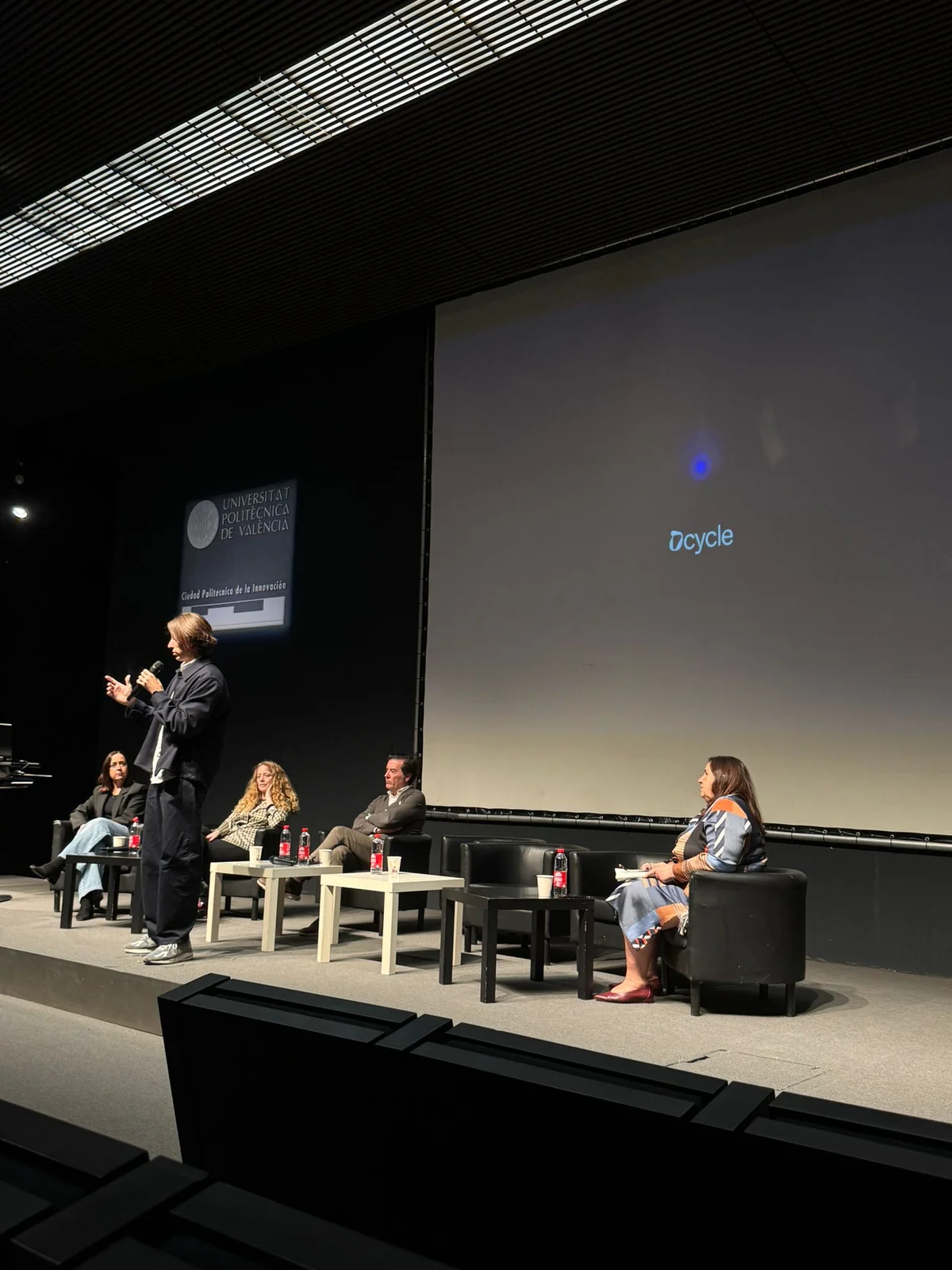
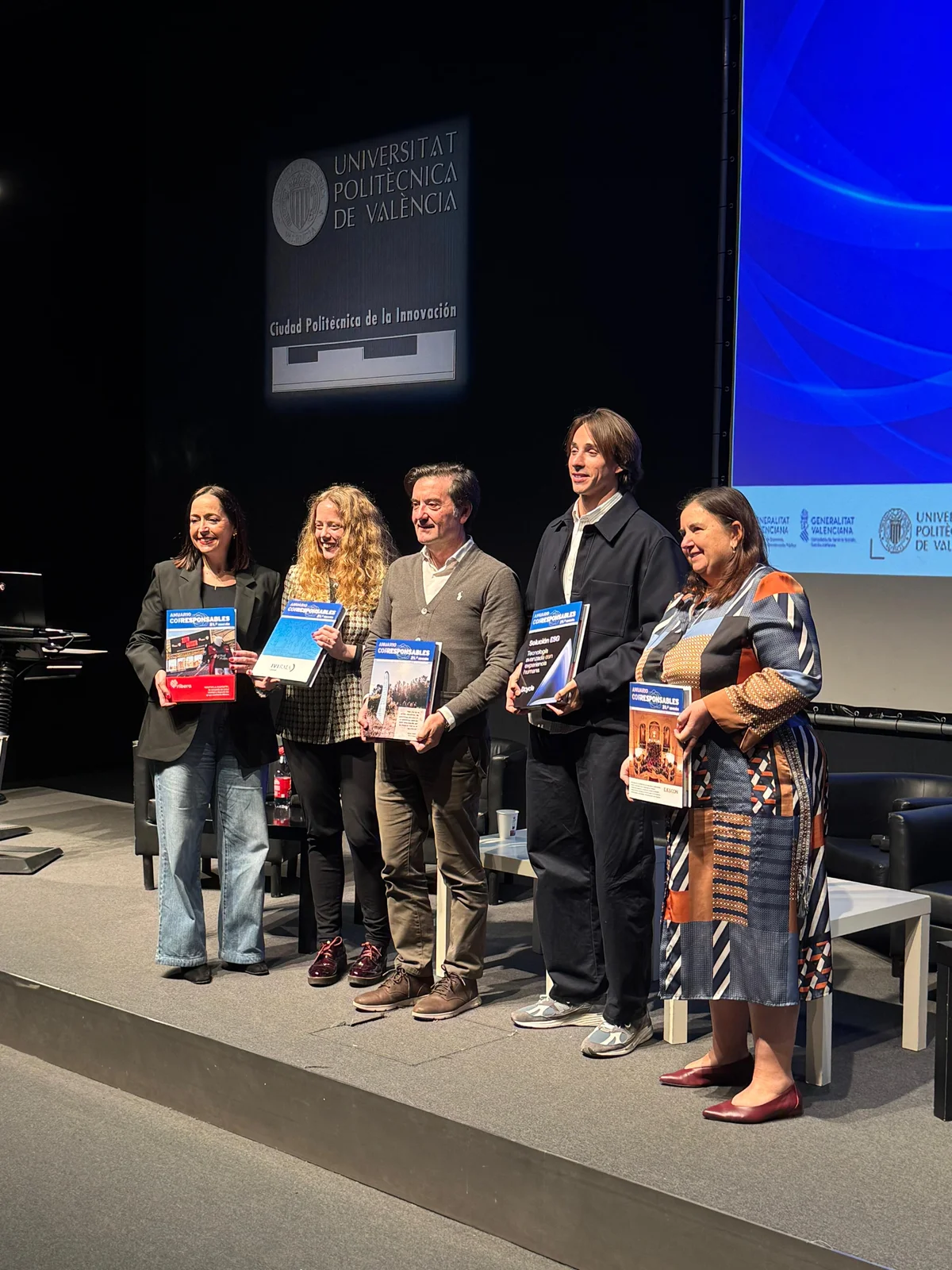
That was the central argument Juanjo Mestre, CEO and co-founder of Dcycle, brought to the Jornadas Corresponsables Valencia 2026. The event gathered 400 professionals from across the sustainability ecosystem to discuss the next phase of corporate responsibility: not just meeting regulatory requirements, but using them as a platform for genuine business transformation.
The question Juanjo posed to the room was direct. Most companies are currently treating ESG reporting as a compliance exercise: a cost, a risk, an obligation. But what if the infrastructure you need to comply with CSRD, the GHG Protocol, and Spain’s own EINF was exactly the same infrastructure that could give your leadership team real-time visibility into operational costs, supplier risks, and business opportunities?
The sustainability reporting landscape has shifted dramatically. CSRD alone now requires companies to report on over 1,000 data points across environmental, social, and governance dimensions. For most organisations, this has translated into a scramble: more consultants, more spreadsheets, more time spent reconciling data that lives in disconnected systems across procurement, HR, operations, and finance.
But the companies already moving beyond this scramble have discovered something important. The data collection infrastructure required for credible ESG reporting is not separate from the data infrastructure that supports good business decisions. They are the same thing.
Juanjo’s core argument at Corresponsables Valencia: the companies that build their ESG data infrastructure well, connecting operational data from across the business into a coherent, auditable system, do not just produce better sustainability reports. They unlock a layer of business intelligence that most organisations have never had access to before.
The automated data collection infrastructure Dcycle builds is designed precisely around this insight: that the real value of ESG data is not in the report it eventually produces, but in what it reveals about how the business actually works.
The practical gap between reporting and deciding is larger than it looks. Most sustainability teams today spend 70 to 80 percent of their time on data collection: chasing invoices, reconciling figures from different departments, cleaning data before it can be used. What is left for analysis, interpretation, and strategic input is minimal.
This is where AI changes the equation. Not by replacing sustainability professionals, but by eliminating the collection burden so they can spend their time on the work that actually matters: understanding what the data means, identifying where the business has hidden emissions, spotting the operational decisions that will have the biggest impact on the company’s trajectory.
Juanjo shared a recent example. A client had been producing accurate carbon footprint reports for two years. Their Scope 1 and 2 figures were clean, their methodology was solid, and their report passed external verification. But when Dcycle’s AI agents were deployed on top of their connected operational data, the company discovered within weeks that a significant portion of their Scope 1 emissions was coming from a fleet management practice that no one had flagged: corporate vehicles being used outside authorised hours, burning fuel that appeared in the data but had never been linked to the behaviour causing it.
The report was accurate. The decision-making intelligence was missing. That is the gap between compliance and competitive advantage.
The Jornadas Corresponsables Valencia 2026 brought together a cross-section of the Spanish sustainability ecosystem at a particularly meaningful moment. The regulatory clock is running: CSRD applies to large companies from fiscal year 2024, with the wave of SMEs following in subsequent years. Spain’s EINF requirements, the Ley de Cambio Climatico, and the broader EU Taxonomy framework are converging to create a compliance environment that no company of significant size can avoid.
But the conversations at the event reflected something more than regulatory anxiety. Across the sessions, from corporate panels to working groups, the recurring theme was readiness: how to build organisations that can not only meet today’s requirements but adapt quickly as the framework evolves, as new ESRS standards come into force, and as stakeholders raise their expectations.
The answer, repeated across different sectors and company sizes, kept coming back to the same root: data. Companies that have invested in understanding and connecting their operational data are not just better positioned for compliance. They are better positioned, full stop.
One of the most consistent observations from the day was about the evolving role of sustainability professionals themselves. For years, sustainability teams operated at the margins of business strategy: responsible for reporting, for policy, for stakeholder communication, but rarely for the decisions that drive the core operations of the business.
That is changing. As ESG data becomes central to regulatory compliance, investor reporting, procurement decisions, and credit assessments, the professionals who own and understand that data are becoming central to how the business operates.
Juanjo framed it clearly: sustainability professionals have spent years building the skills, relationships, and systems needed to gather operational data from across complex organisations. Those skills are now among the most strategically valuable in any company. The question is whether organisations recognise that and structure accordingly, or whether they continue to treat sustainability as a function separate from business intelligence.
The data architecture for carbon footprint tracking and the broader ESG data infrastructure Dcycle builds are designed to help make that structural integration possible: not just compliant reporting, but operational insight.
The shift from compliance function to strategic intelligence role is not a future possibility. It is happening now, in companies across Spain and Europe that have decided to invest in their data infrastructure rather than just their reporting process.
The companies at Corresponsables Valencia that are furthest along this path share a common characteristic: they stopped asking “how do we produce the report?” and started asking “what should we know about our business, and how do we get that information reliably and continuously?”
If your team is ready to make that shift, let’s talk.

See how Dcycle can cut your reporting time by 70% and give your auditors what they need , the first time.
See Dcycle in action