 COAM, Colegio Oficial de Arquitectos de Madrid
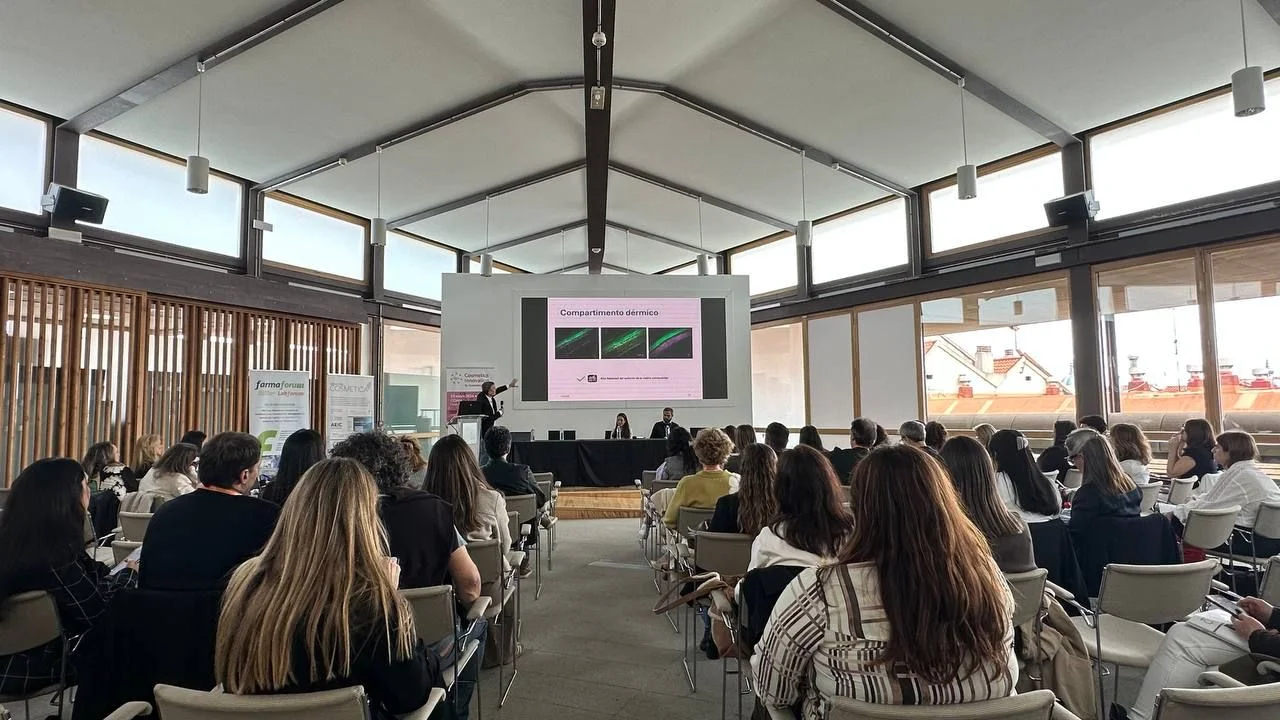
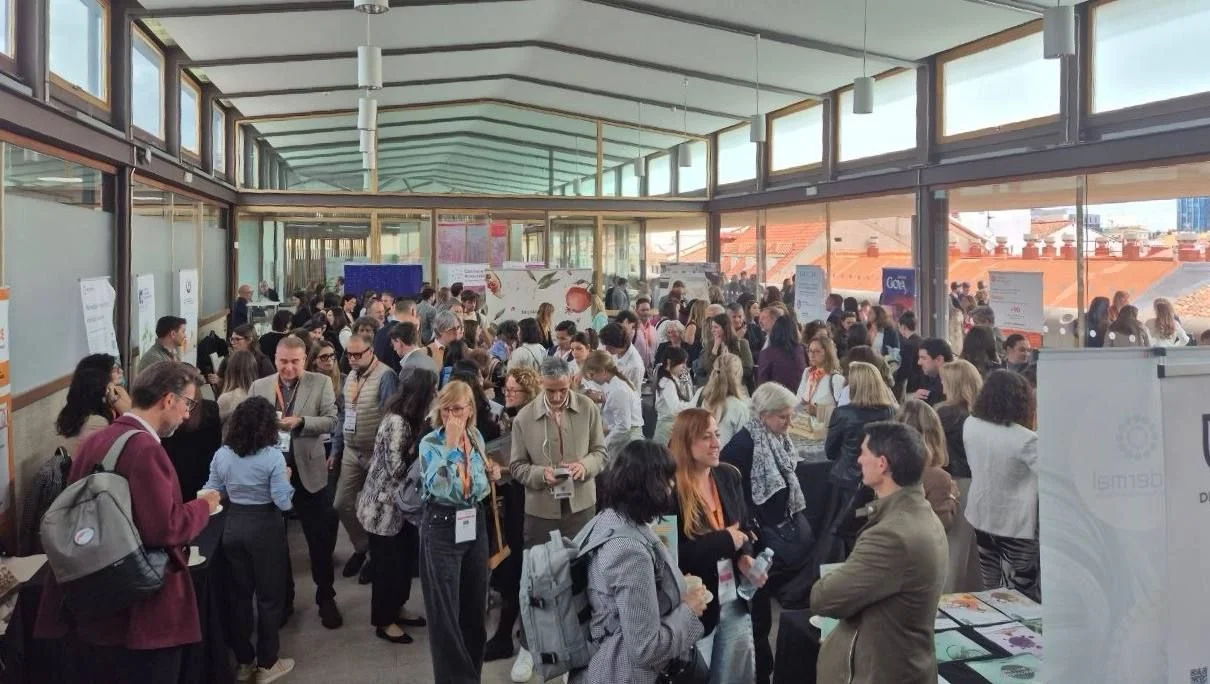
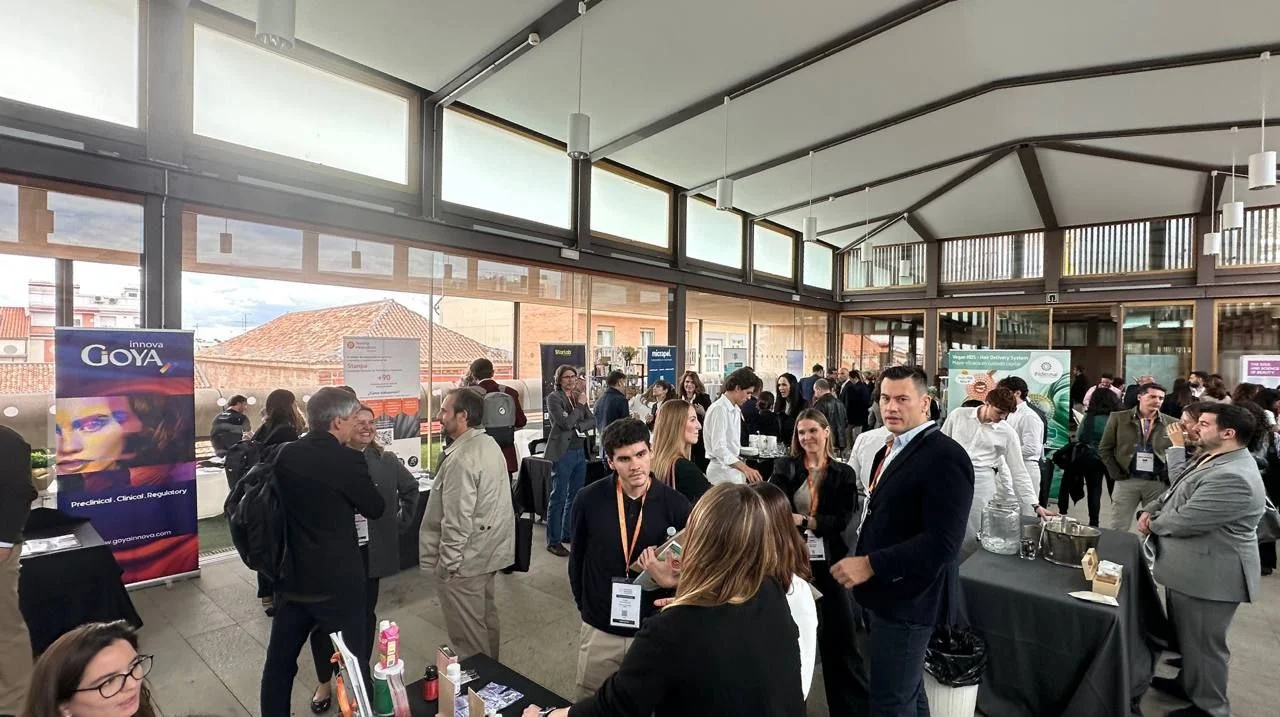
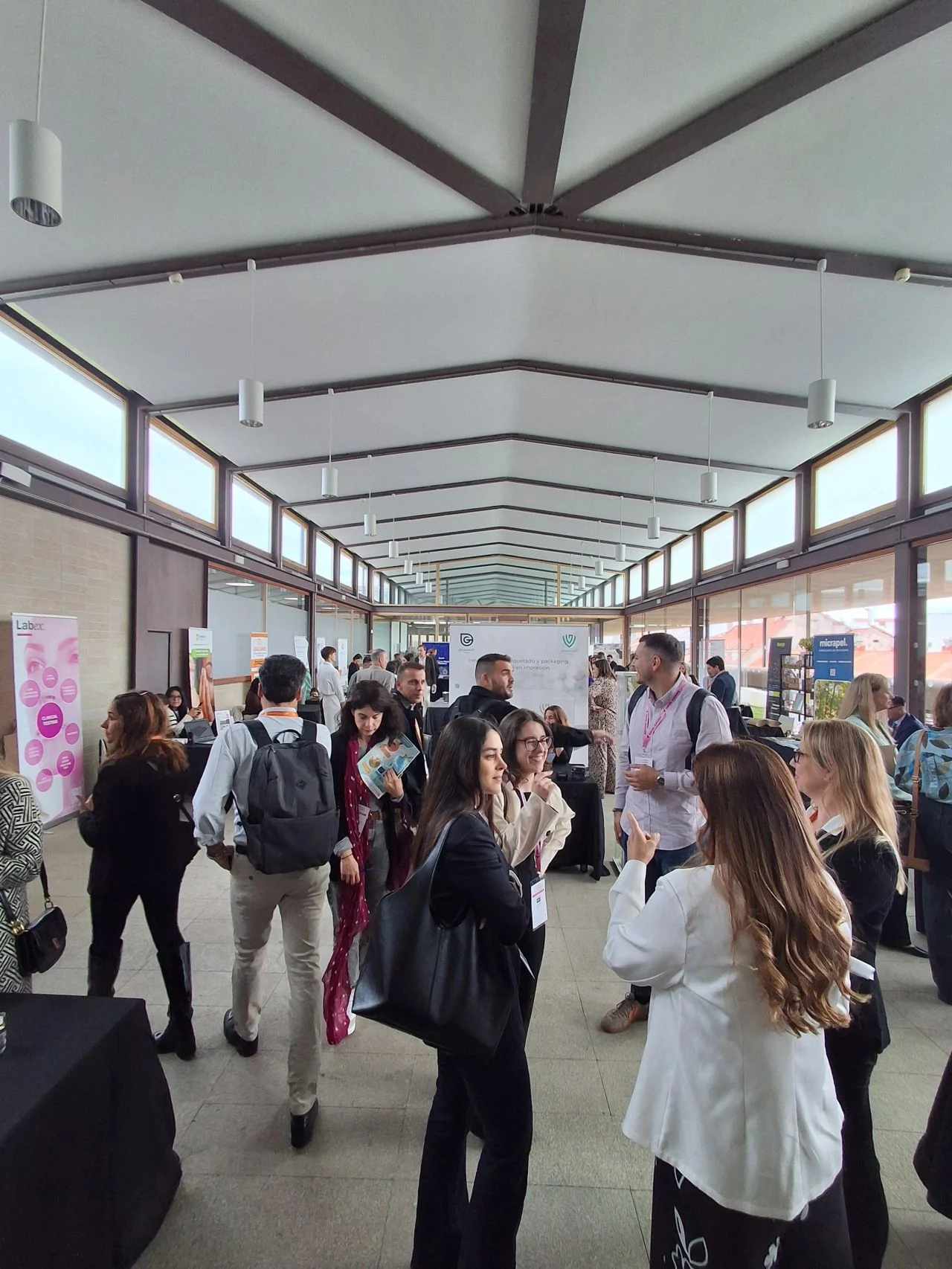
 The Cosmetics Innovation forum brought together more than 500 leaders of the Spanish cosmetics ecosystem at COAM in Madrid. Brands, formulators, packaging suppliers and consultancies spent the day discussing how innovation should be measured, communicated and turned into real competitive advantage. The agenda mixed keynote talks, hands-on workshops and an exhibition zone where the industry’s heaviest hitters showed what they are working on. Laboratorio Goya led the platinum sponsorship and CosmeticaForum framed the day around a question that has hung over the sector for years: how do we convert sustainability work into business value, rather than into another PDF that no one reads.
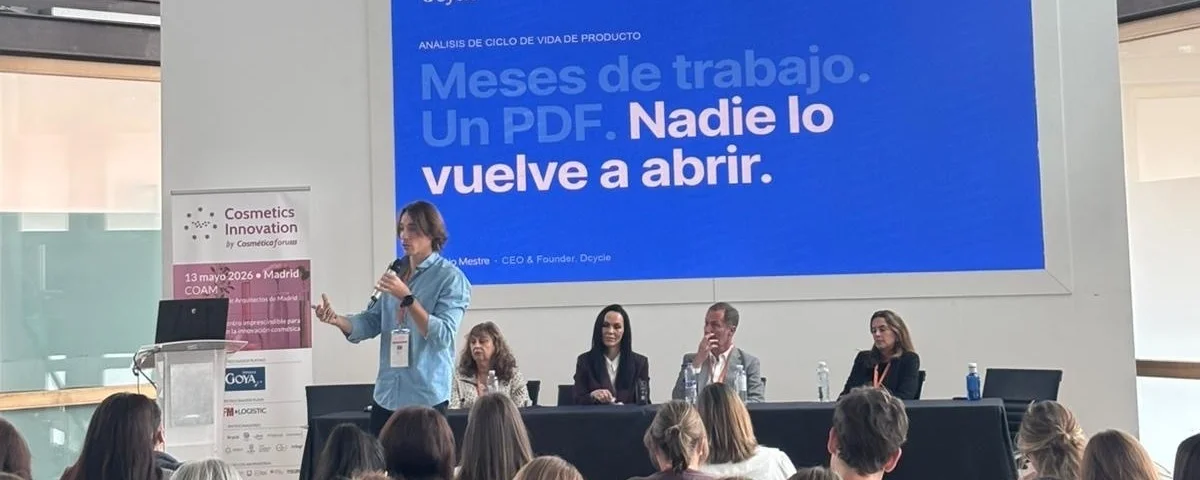
That last point was the one Juanjo Mestre, CEO and cofounder of Dcycle, came to challenge directly. His session, “Del dato a la estrategia: como convertir la sostenibilidad en una ventaja competitiva”, argued that the LCA problem cosmetics companies face is not a data problem at all. It is a disconnection problem.
Most cosmetics brands today run their life cycle assessments the way they did a decade ago. Procurement chases primary data from suppliers. Packaging teams collect spec sheets. Manufacturing exports consumption from the ERP. A consultant pulls everything into a spreadsheet, runs the model, and delivers a PDF three months later. By the time the deliverable arrives, the formulation has already moved on, the launch window has closed, and nobody opens the document again until the next reporting cycle.
Juanjo’s slide put it plainly on stage: “Meses de trabajo. Un PDF. Nadie lo vuelve a abrir.” The data already existed. It always existed. It just was never connected.
The panel that followed made clear why this matters now. Regulators are tightening around eco-design, Scope 3, and packaging disclosures. Buyers and retailers are demanding carbon footprint data per SKU. Sustainability teams are asked to make decisions before the next launch, not after the next audit. Static LCA reports cannot keep up.
Dcycle’s proposal at Cosmetics Innovation was simple to state and harder to execute. Stop treating LCA as a document and start treating it as a living layer of operational intelligence that any team in the company can query.
That means automated data collection connected to the systems that already hold the data: ERPs, procurement platforms, packaging databases. It means a model that updates when a supplier changes resin, when a formulation swaps a fragrance, when a SKU moves to a different manufacturing site. And it means an AI layer on top, so that questions that used to require a consultant and three months (“what happens to the footprint of our top ten products if we replace this surfactant?”) can be answered in seconds.
It is the difference between answering “what was our footprint last year” and answering “what should our footprint be next quarter, and what do we change to get there”.
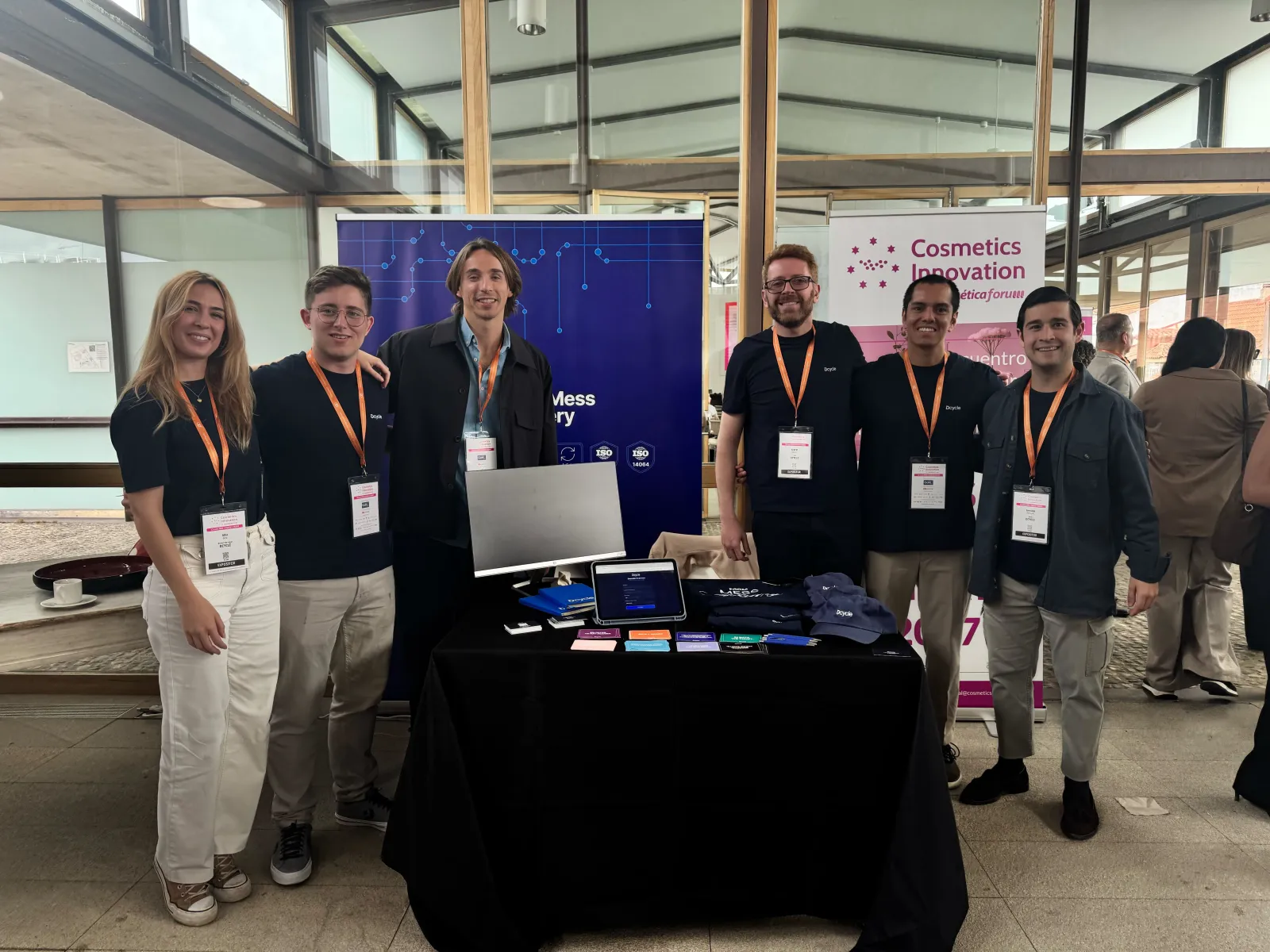
Our booth in the exhibition zone made the same point in a more tactile way. The “From Data Mess to Mastery” line was everywhere: on the team T-shirts, on the notebooks and caps we handed out, and on the screens running live demos of the platform.
Throughout the day, the team walked attendees through real LCA flows in Dcycle. How a primary data point flows from a supplier into a product model. How the model recalculates when packaging changes. How the same underlying data feeds Scope 3 reporting and eco-design decisions. Conversations ranged from “we are starting from zero on Scope 3” to “we have an LCA deliverable but cannot operationalise it”. The answer was the same in both directions: you do not need more spreadsheets, you need the data to be connected.
If your cosmetics company is staring at another LCA cycle and wondering how to turn it into something the business actually uses, let’s talk.
Thirty minutes with our team. We show you how your data would come in, and what you would get out.