
 GHG Protocol
 CSRD
 ISO 14064
 EINF
 VSME
 EcoVadis



01Data to report
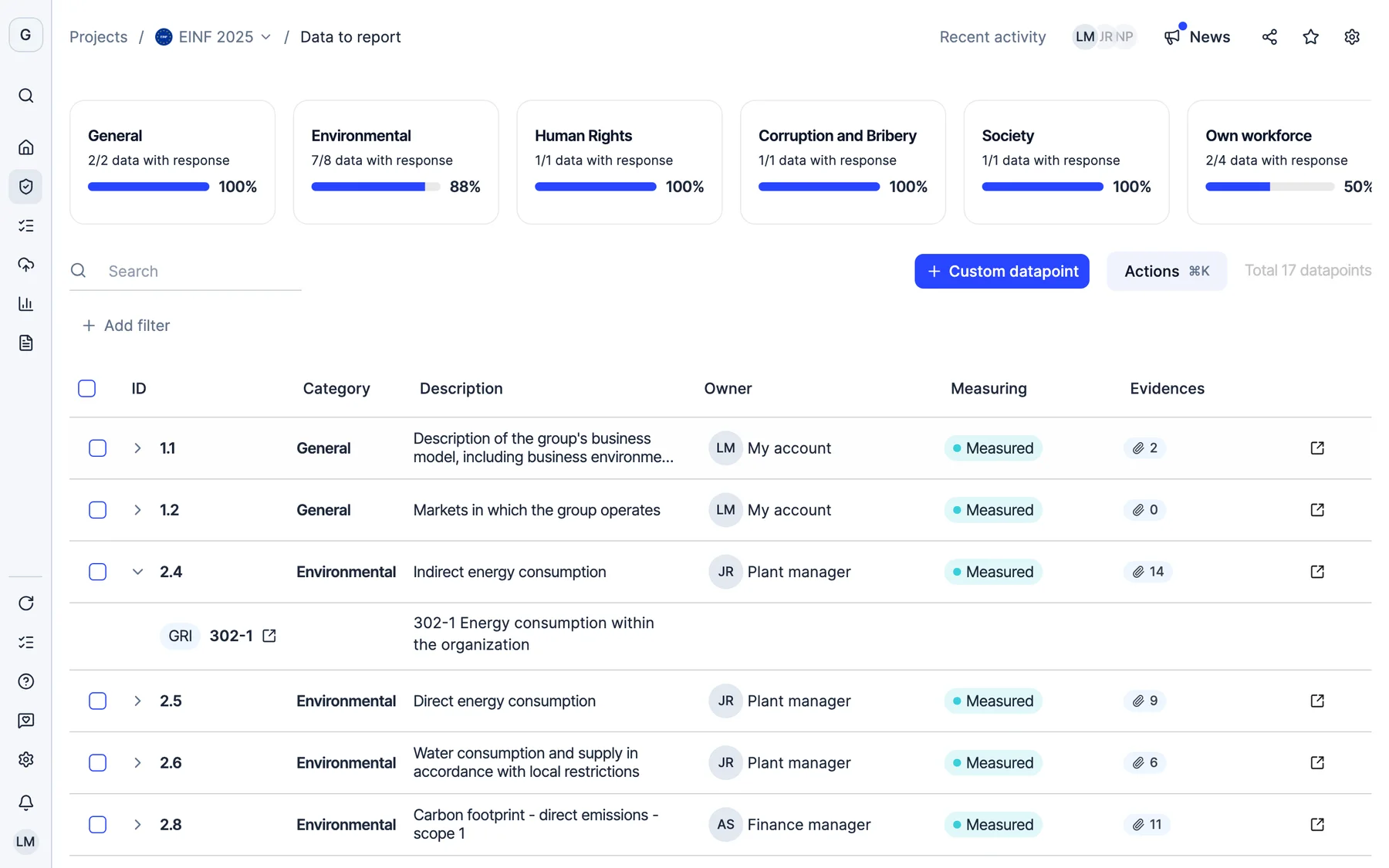
Every data point, with its GRI code.
In the EINF you see what each section requires, who answers it and whether it is already measured. Each data point expands to show the GRI standard it covers.

CSRD, EINF (Spain’s non-financial information statement), VSME, ISO 14064, EcoVadis or CDP from the same data. You collect each data point once and Dcycle takes it to the right disclosure in each framework, with its code and its evidence.
More than 2,000 European companies report with Dcycle






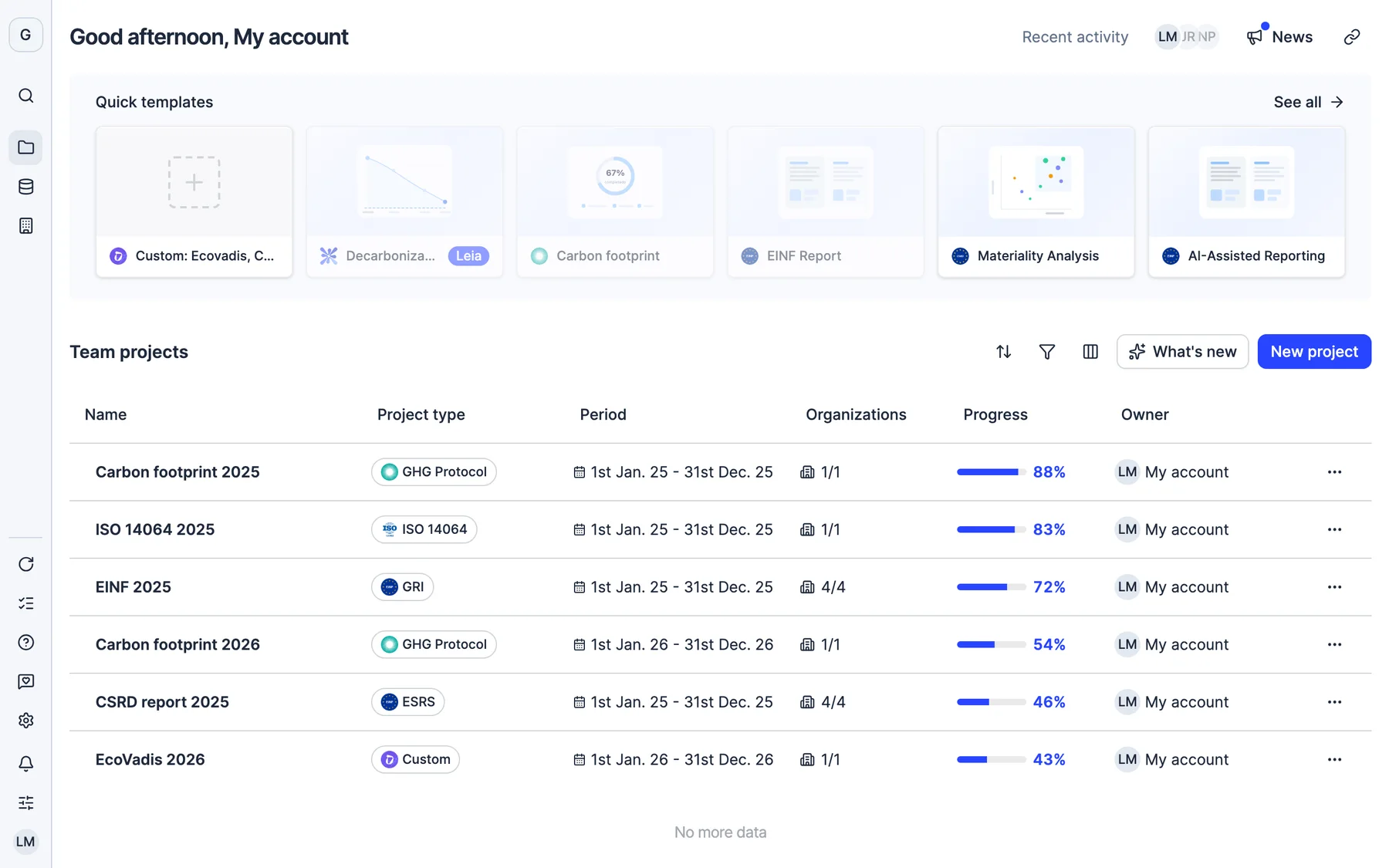
Dcycle takes each data point to the right disclosure in each framework. Pick one, on energy, waste or people, and see where it ends up.
If a framework doesn’t require a data point, it doesn’t ask you for it. And if it does, it already has it.
In the EINF you see what each section requires, who answers it and whether it is already measured. Each data point expands to show the GRI standard it covers.
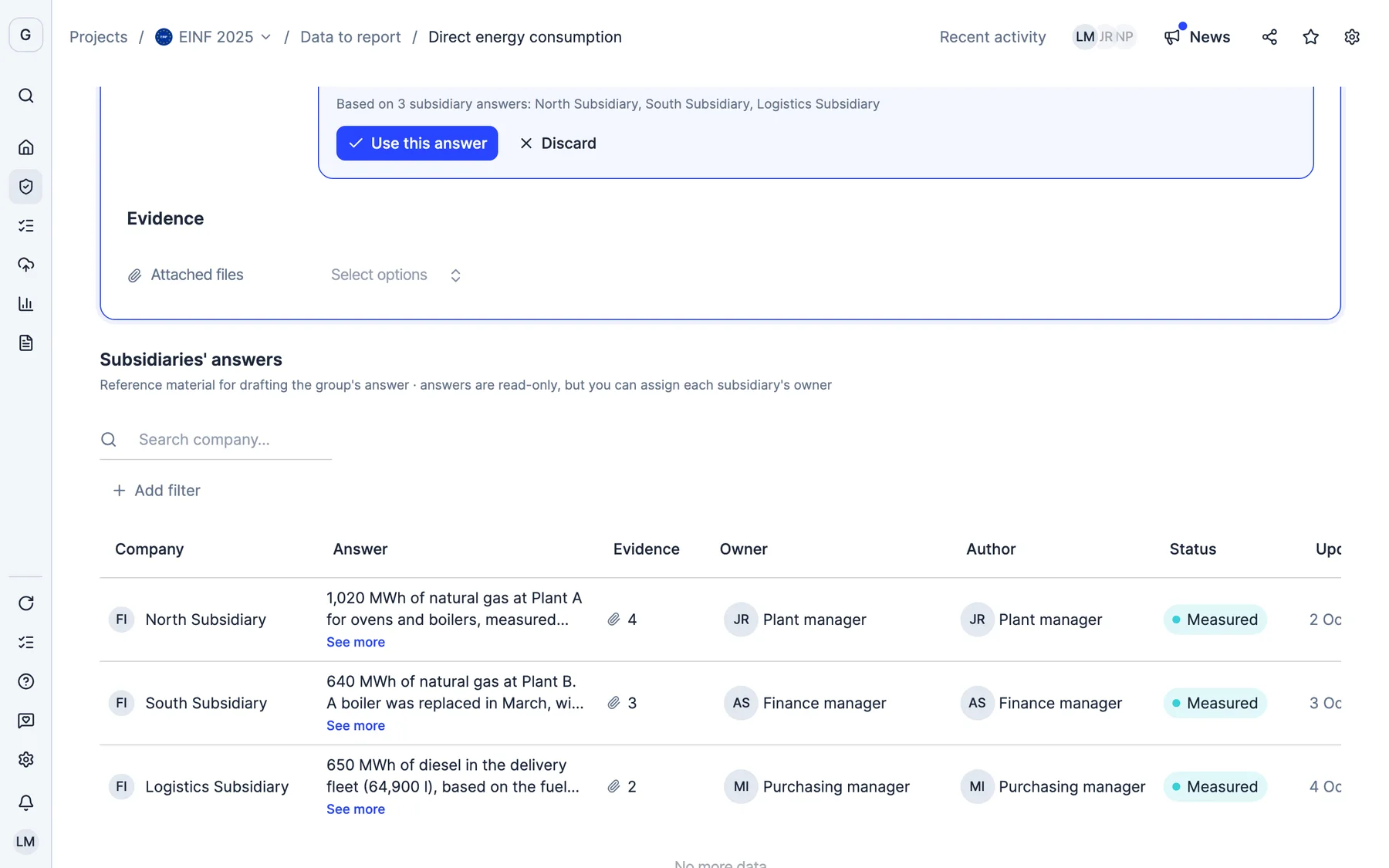
Each company in the group answers its part, with its evidence and its owner. With “Consolidate answers”, Leia drafts the group answer and you decide whether to use it.
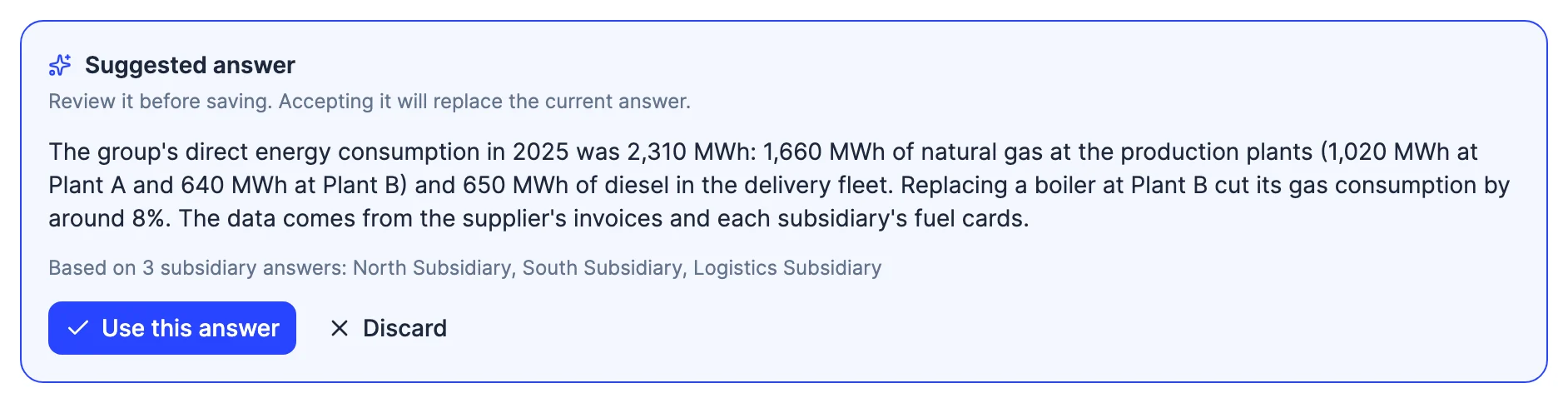
Real Dcycle screens with a sample company.
Dcycle helped us consolidate 6 facilities across 2 countries into a single source of truth. Our auditors couldn’t believe the level of traceability.
 Lina PenaCorp. Services Director, KLN Iberia
 JGH Logística
The JGH group goes from five companies with separate processes to a consolidated footprint, double materiality and the group EINF in Dcycle
Read the story“Thanks to Dcycle we have been able to make better use of our time to provide a better service. This is key to keeping our customers satisfied.”
Teresa Ibáñez, Quality Department at JGH Logística
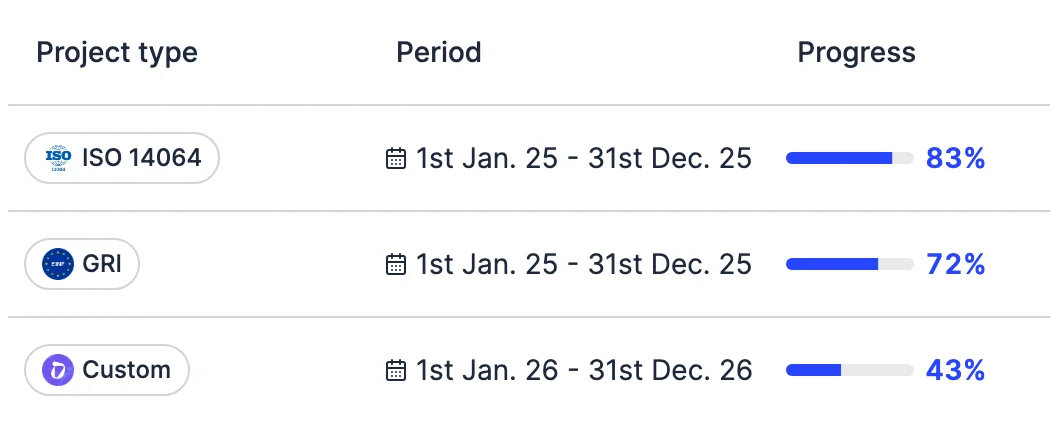
Each framework is a project type: carbon footprint with the GHG Protocol, CSRD with the ESRS, EINF with GRI traceability, VSME, ISO 14064, ISO 14001, energy audits with ESOS and ISO 50001, life cycle assessment, logistics with GLEC, SFDR (PAIs), PPWR, sustainable mobility plans and decarbonisation plans. EcoVadis, CDP or any other questionnaire is handled in a custom project, and Leia helps with the EU Taxonomy.
No. You collect each data point once and Dcycle maps it to the structure of every framework you report on. An electricity invoice counts towards scope 2 of your footprint, ESRS E1, ISO 14064 and the GRI indicators in your EINF, with the same figures in all of them.
In the EINF project, “Data to report” lists what Law 11/2018 requires, with its owner, its status and its evidence. Each data point expands to show the code and title of the GRI standard it covers, with a link to the page of the official PDF, and the report includes the Law 11/2018 compliance table and traceability to the GRI standards.
You choose which organizations take part in each project. In the CSRD and the EINF, each subsidiary answers its data with its evidence and its owner, and the parent company sees them together. With “Consolidate answers”, Leia drafts a group answer from the subsidiaries’ answers, which you always review before using it.
Yes. Leia reads the documents you already have (policies, annual reports, procedures) and drafts answers citing the source and the standard. You confirm, edit or discard each answer before it goes into the report.
Each project has its own report builder: you start from a framework template or from scratch, with Dcycle’s figures inside, edit it as a team and, if the data changes, “Refresh data” brings it up to date. It downloads in Word or PDF. You’ll find the details on the report builder page.
Yes. Since August 2026 the reporting module follows the simplified ESRS, with fewer requirements on climate, social and governance topics, and the data you already had is kept without migrations. It is based on the draft delegated act and will be adjusted when the final text is published.
Thirty minutes with our team. We show you how your data would come in, and what you would get out.
See Dcycle in actionWhat your session looks like



 With someone from the team who then supports you