

January 01 / 05
Collecting the year’s data
Who asksThe whole company
With Dcycle
Each team gets its request with a due date and an owner, and you see all of them on one screen.
Each team delivers its part with a due date and an owner, and the same data serves the verifier, the client and the board.
The same information, in a spreadsheet and in Dcycle
Teams at these companies already rely on Dcycle






“My suppliers don’t have the data, so Scope 3 stays an estimate”
With Dcycle. You ask the suppliers who have the data and estimate the rest from spend, with the quality of each figure declared. Scope 3 closes complete and defensible.
Scope 3 not closed
“I depend on other departments getting back to me”
With Dcycle. Each team gets its request with a due date and an owner, and you see where all of them stand on one screen. It stops being a favour and becomes a task.
2026 report with no requests
“Consolidating the group without reporting five times”
With Dcycle. A parent and subsidiaries tree: data is entered once in each company and feeds the group’s footprint, ISO 14001 and CSRD.
Three companies not consolidated
Who asksThe whole company
Each team gets its request with a due date and an owner, and you see all of them on one screen.
Who asksThe verifier
Every figure links to its invoice or reading.
Who asksInvestors and clients
The same data, in CDP’s format.
Who asksYour clients
Reusable answers from one data set.
Who asksThe executive committee
Each measure with its cost and what it cuts, so you go to the committee with a plan, not an intention.
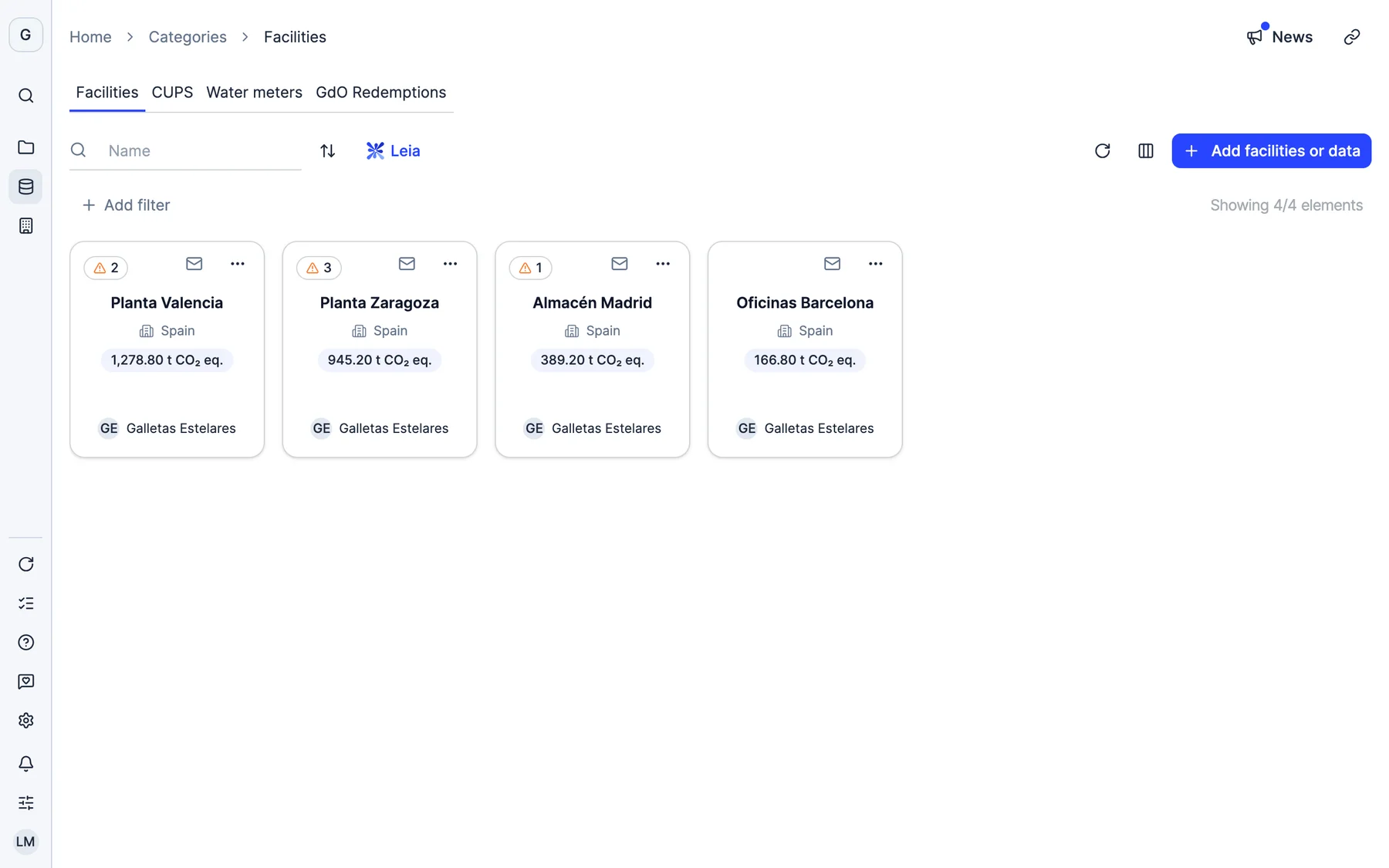
Plants, warehouses and offices with their footprint. Whatever does not add up is flagged, so you review it before the verifier does.

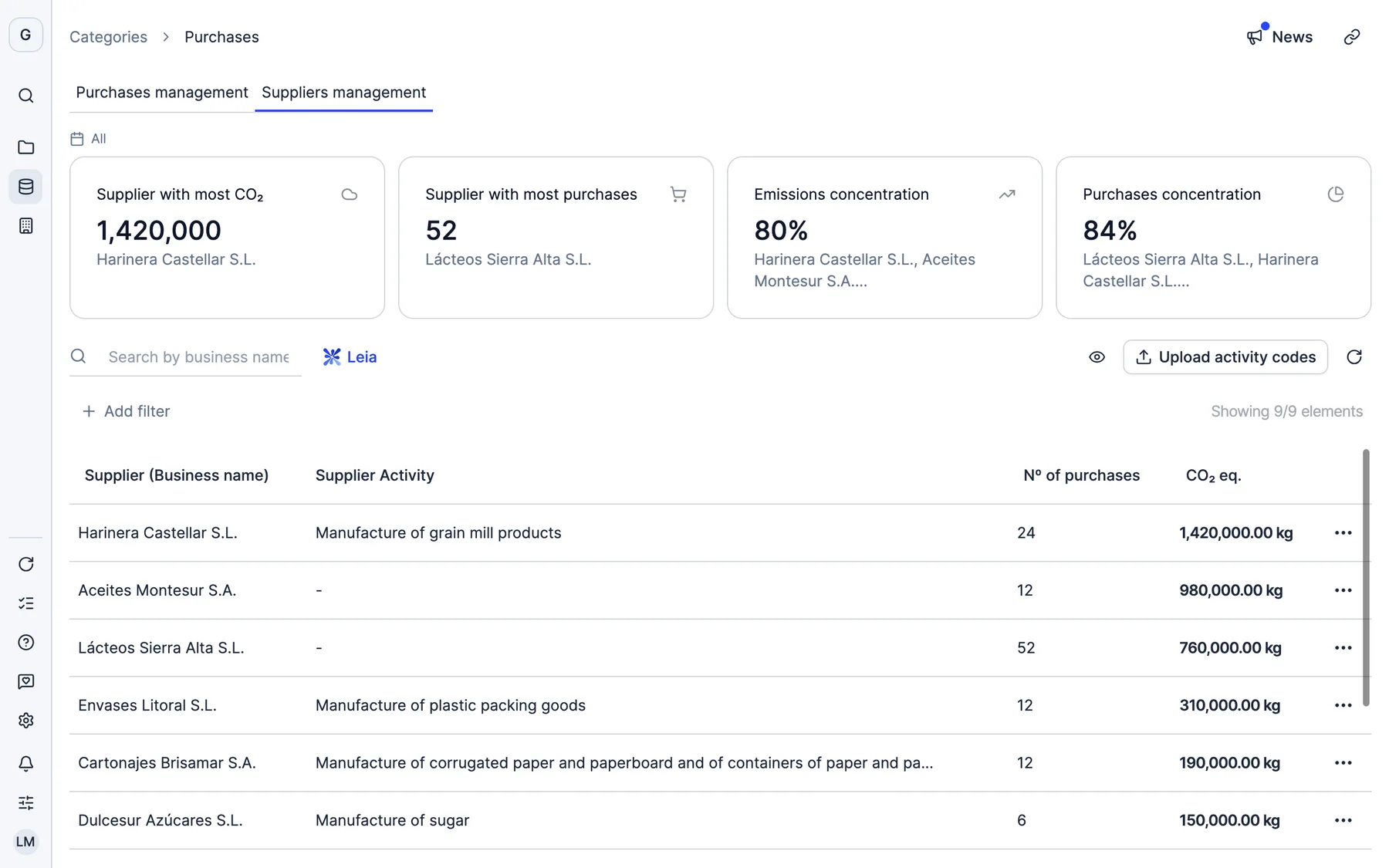
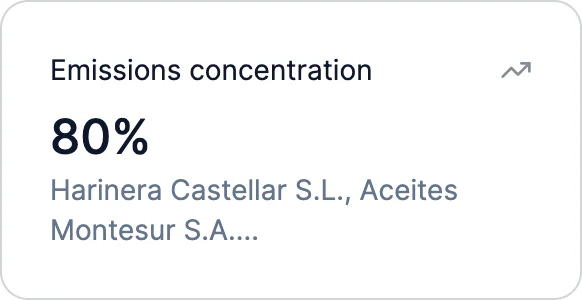
Where the emissions of your purchases concentrate and which suppliers explain most of them, so you know where to start.
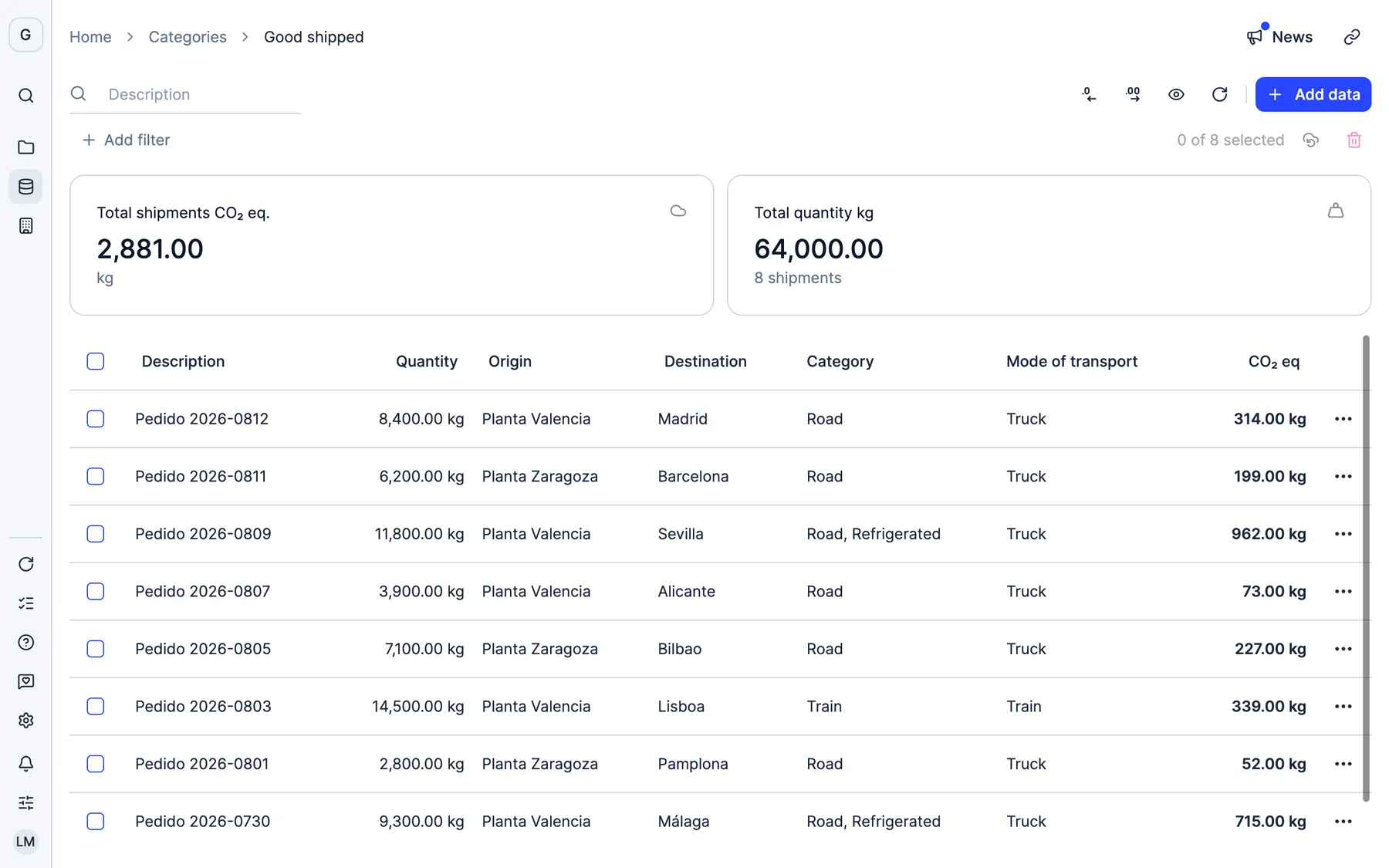
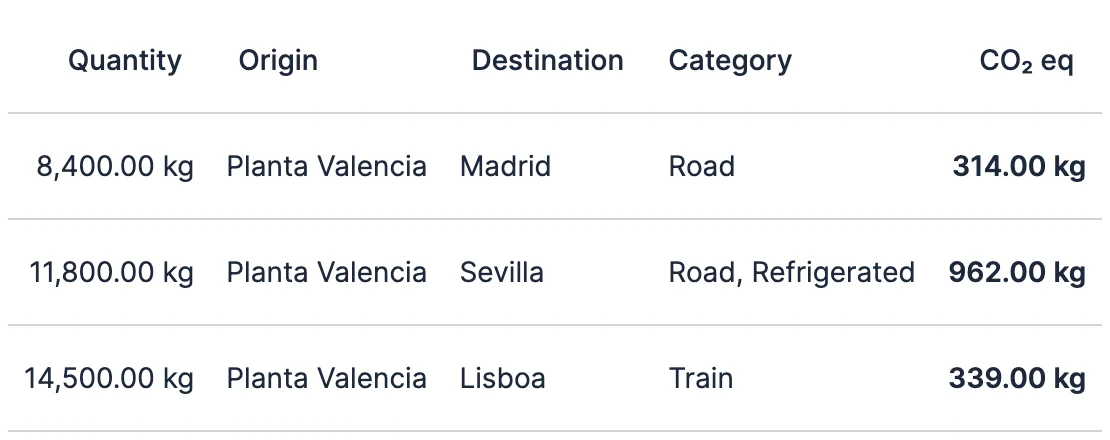
Road or rail, refrigerated or not: every shipment, from origin to destination, with its weight and its emissions.
Delivery vans, refrigerated trucks and cars, each one with its plate, its fuel and its footprint.
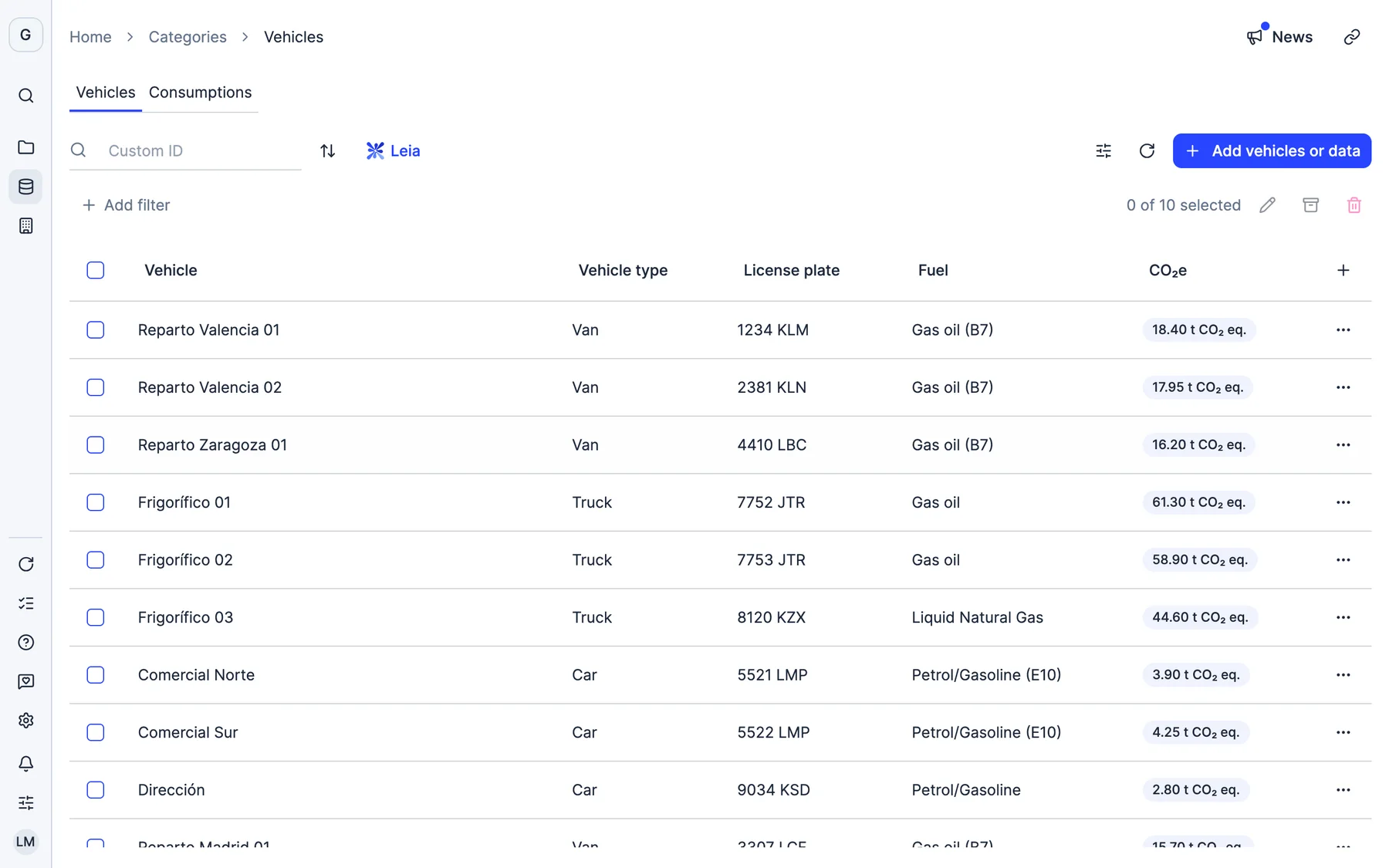
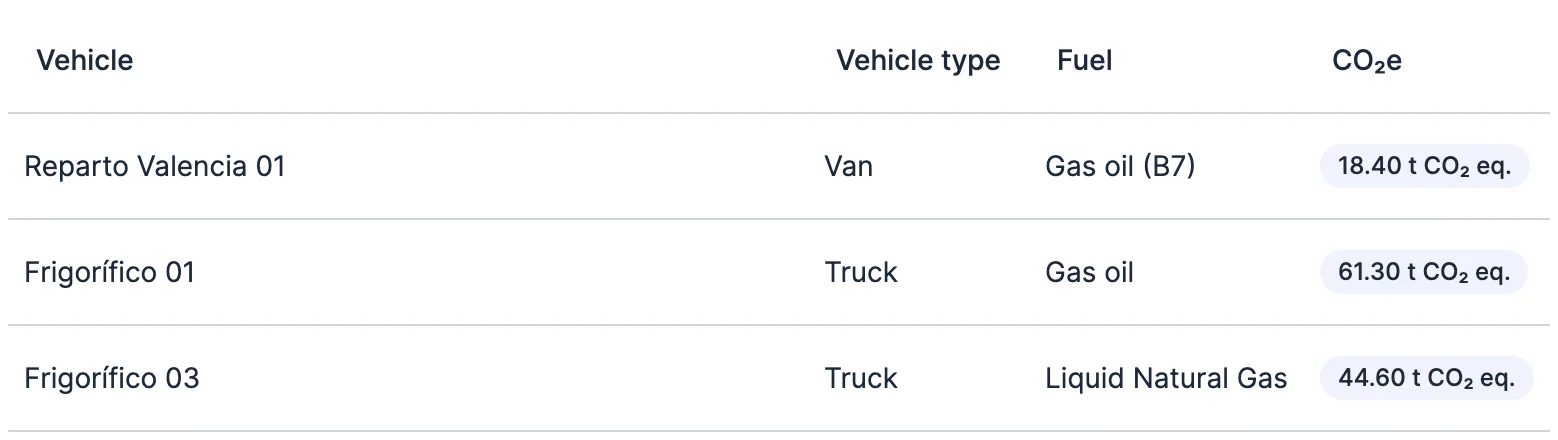
Real screens of Dcycle with the data of a made-up company.
The data you load for your own work completes other teams’ data. Together they answer questions none of them could alone.
Knows the impact.
Knows who you buy from.
Knows what it costs.
60% of scope 3 sits with 12 suppliers: that’s where the reduction plan starts.
 Finsolutia
“Dcycle gave us the structure and methodology we needed to manage our footprint across two countries coherently. Now we have comparable data and can report with confidence.”
Teresa de VicenteSustainability Manager, Spain
Read the caseYes. Multi-framework reporting maps one data point to every framework you report under, so CSRD, EINF, CDP and EcoVadis come from the same dataset instead of four spreadsheets.
Each data point is stored once and mapped to the frameworks that use it. A new version of a standard changes the mapping, not the data you already collected.
No. Data can arrive through integrations with your ERP or from the invoices and spreadsheets you already have, and roles and permissions give each team access only to its own part.
Yes. The decarbonisation plan models reduction actions on top of your baseline, so you can take the cost and the impact of each measure to the committee.
We are ISO 27001 certified, GDPR compliant and data is hosted in the EU. Roles and permissions decide who sees and edits each data set, and the security documentation is public.
security.dcycle.io →The platform automates collection and calculation, and our advisors help you get started and with every report, so nothing is left behind.
Expert guidance →And if your question isn’t here, we answer it in the demo.
How the 30 minutes go
ISO 27001 · GDPR · Hosted in the EU · No commitment
Pick a day and time